
Simply Mindful: A New Approach to Mindfulness
The UC San Diego Center for Mindfulness (CFM) had decades of research and a respected clinical program, but no way to reach the people who needed it most. I joined a three-person graduate design team to build the research foundation, tools, and marketing campaign that would help CFM become something the everyday person could actually find, understand, and use.
Overview
By mapping who CFM was currently reaching and who they weren't, we identified two compounding problems: CFM was oriented toward hospital referrals and existing practitioners, leaving out the much larger population of people who had never considered mindfulness at all. And for that population, the barrier wasn't access, it was identity. People weren't skipping mindfulness because it was hard to find. They were skipping it because nothing about it looked or felt like it was made for them. Shifting from "how do we serve our current audience better" to "how do we reach the person who doesn't think this is for them" changed everything about what we designed.
Project Reframe
Duration: 14 weeks · UT Austin M.A. Design Capstone
Collaborators: Vennila Natarajan and Michelle Tamir
Role: UX Design, Design Research & Synthesis, Service Design Strategy, Marketing, Project Manager
Tools: Figma, Claude, ChatGPT, Gemini, TallyForms, Miro, Canva
Audience
Two interconnected users: mindfulness newcomers who needed a frictionless, personalized entry point, and CFM's administrative team drowning in 80+ emails a week from people asking which course was right for them. Designing for one without the other would have addressed the symptom, not the system.
Foundational Research
CFM came to us wanting help getting more embedded in the clinical setting at UCSD Health. But the clinical pathway had structural barriers we couldn't design around: no access to Epic, no established physician referral relationships, and an insurance gap that stopped patients from continuing even when they did find CFM. The clinical route wasn't designable.
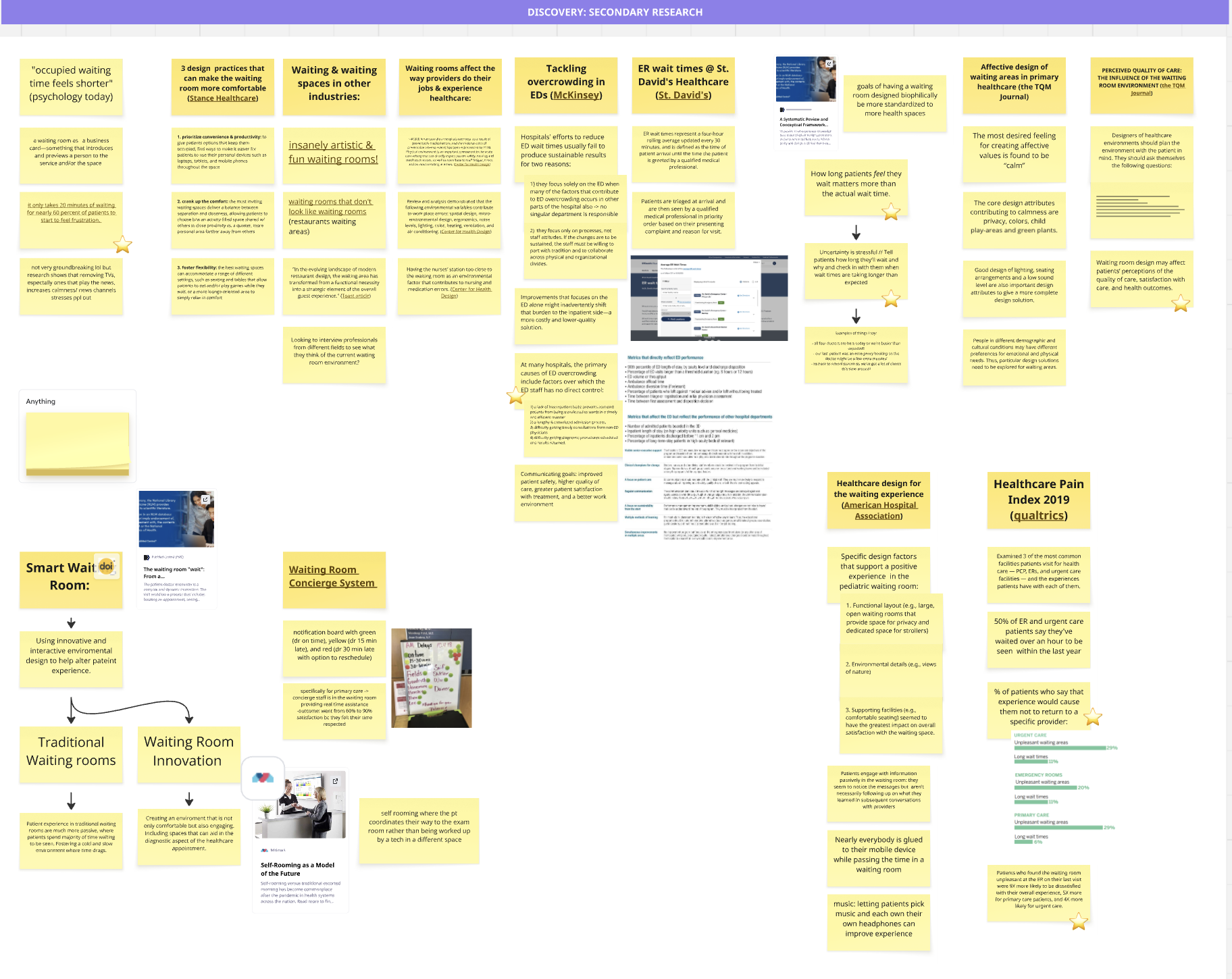
So we shifted the question. We had two weeks and a deliberately wide lens. Interviews with subject matter experts, secondary research showing positive outcomes even from minimal practice, and our own synthesis all pointed the same direction: the opportunity wasn't inside the hospital. It was everywhere else. CFM's existing marketing spoke to people already practicing mindfulness, leaving everyone else completely unaddressed.
The business problem was reach. The human problem was belonging. Until CFM could solve the second one, the first one didn't matter.
6 CFM Subject Matter Experts
CFM Founder
CFM Director
Instructors
Insight Framework
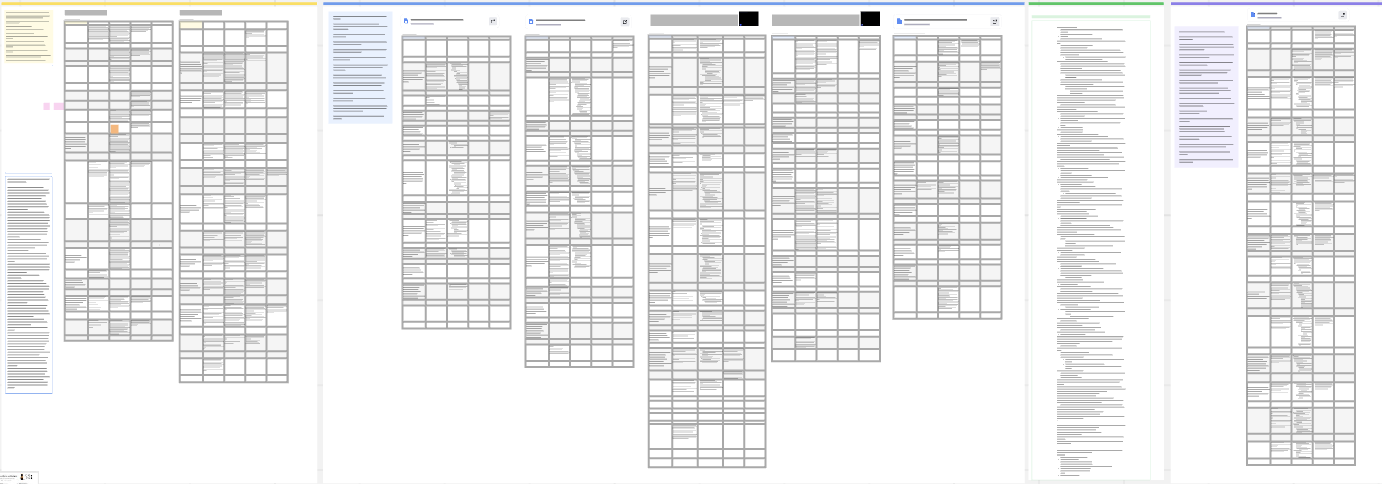
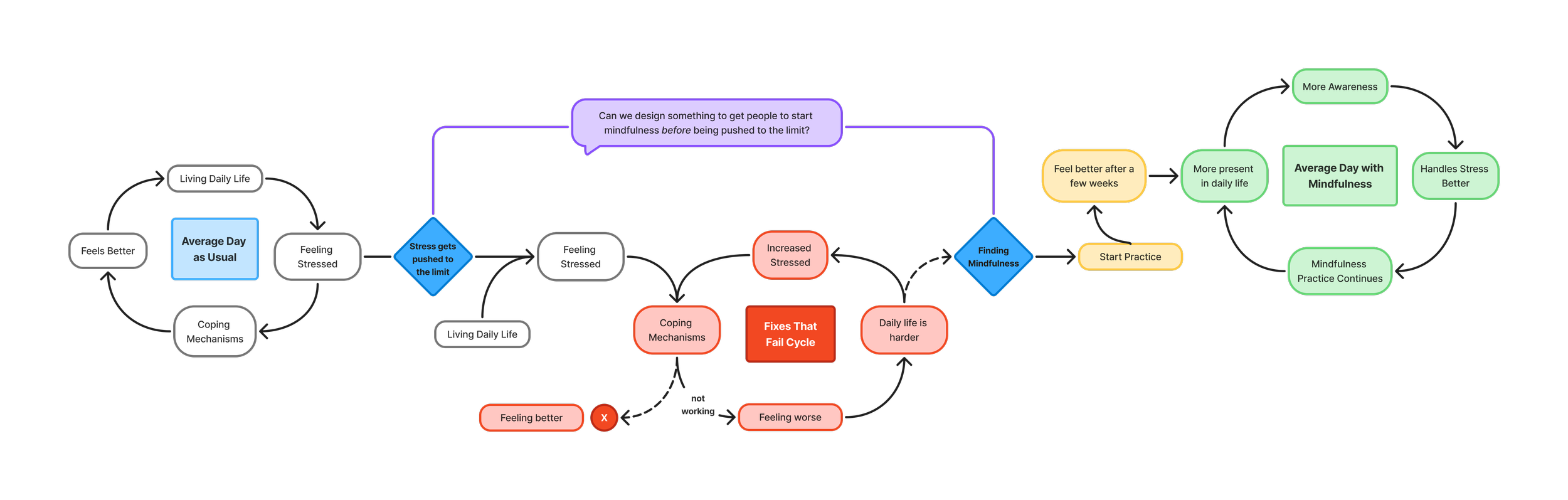
We built a Gemini Custom Gem to run an initial synthesis pass across 20+ interviews, generating over 90 candidate insights. That gave us the raw material. The final three came from us, shaped by the nuances only we had heard in each conversation. The journey map I created made the core problem visible: almost everyone who practiced mindfulness arrived there through crisis. CFM was waiting for people at their breaking point. The question became: could we reach them before they got there?
“If outreach is the goal, be visible and meet people where they are”
-Cal Thompson Former VP of Design at Headspace
Final Insights
4 Adjacent Experts
Former VP of Design at Headspace
Internal Mindfulness Leader at Meta
Mindful Athletic Journal Founder
Mindful Lawyering Professor
3 Practitioners
Child Psychiatrist
Optometrist & Mindful Enthusiast
Mindfulness Enthusiast at Meta
9 Survey Responses
General Population Perspectives
One constraint we couldn't get around: no access to UCSD Health practitioners directly, which left the clinical referral picture incomplete.
What kept surfacing was a paradox: Mindfulness felt completely accessible to everyone already inside it and genuinely difficult for anyone trying to get in — partly because the word itself had gone mainstream enough to carry a fixed image that had almost nothing to do with what the research actually showed.
“Studies show that neurologically, staying still for 2 min a day is more effective than sittings still 30 min every week”
-Bob Peck Former Internal Mindfulness Leader at Meta
“Heavy jargon and ‘flexing’ behavior feel intimidating to beginners”
-Mindfulness Practitioner
1
2
3
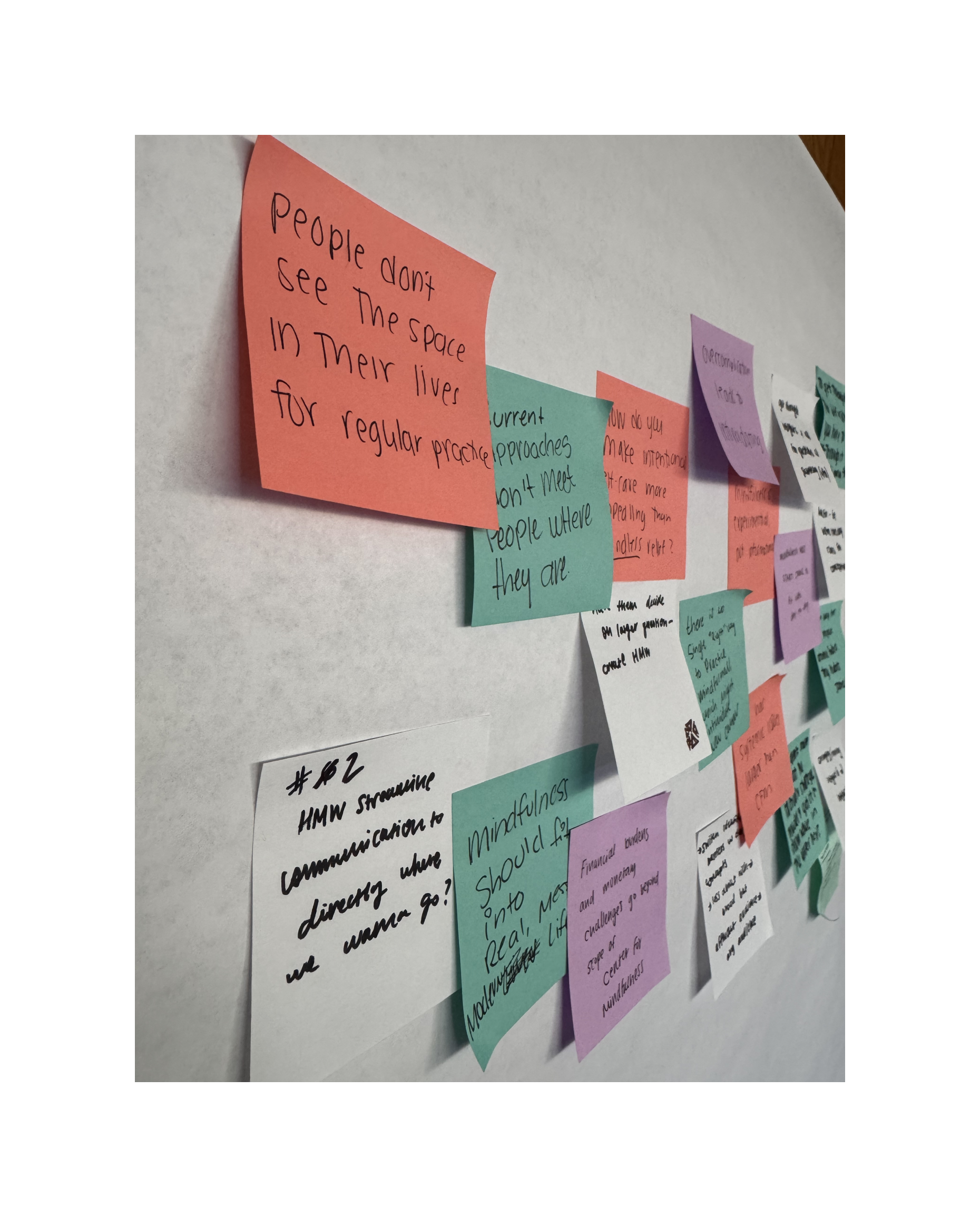
People want to see themselves in a mindfulness practice. CFM's existing imagery and language spoke to a specific kind of person: retreat centers, yoga poses, long sessions. Most people looked at it and thought: that's not me.
Consistency matters more than duration. Small, frequent practice produces real benefit. The barrier to starting could be much lower than CFM had been communicating, and that changed what we designed.
Overcomplication leads to intimidation. The more structured and elaborate the entry point, the faster people self-selected out. Simplicity wasn't a nice-to-have. It was the whole game.
Ideation & Prototyping
AI Integration
I owned two deliverables: the onboarding quiz and the marketing campaign. Both relied on AI as a working partner, not a decision maker.
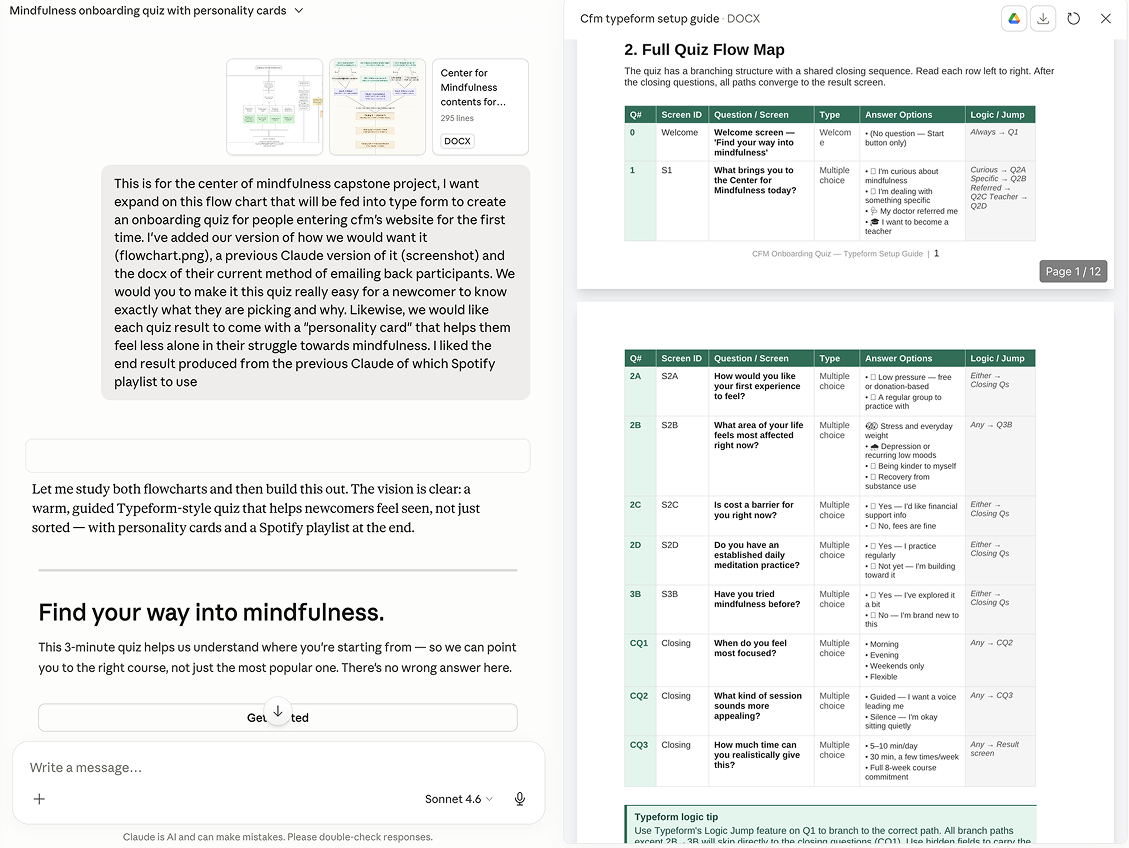
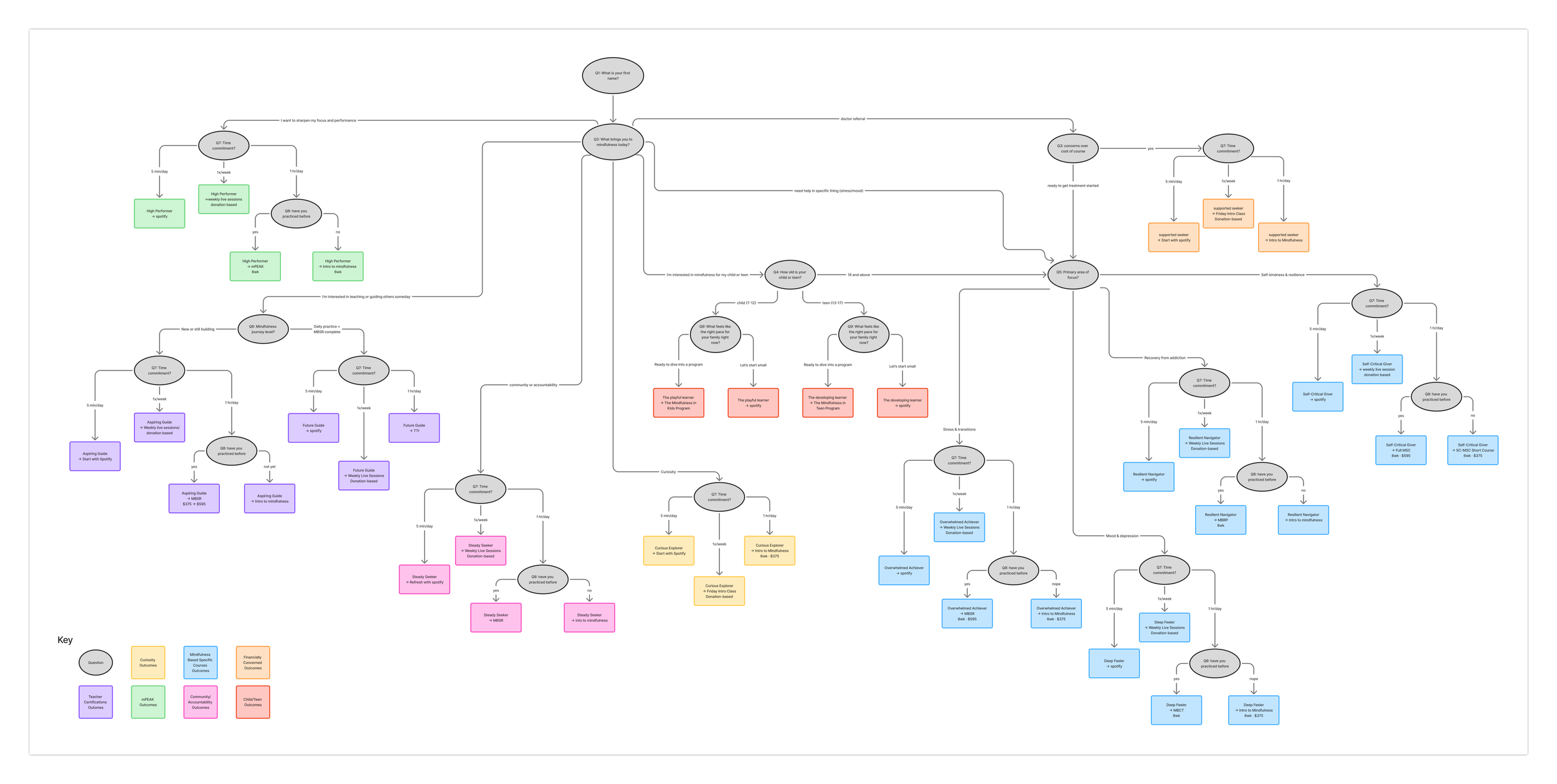
For the quiz, I fed CFM’s course catalog and email templates into Claude to generate an initial decision tree, then rebuilt several branches by hand after a review session with the CFM team, since the contextual judgment required was outside what Claude could infer. I built the final quiz in Tally and co-created 11 personas with ChatGPT, then wrote a brand guideline so CFM could generate future personas independently.
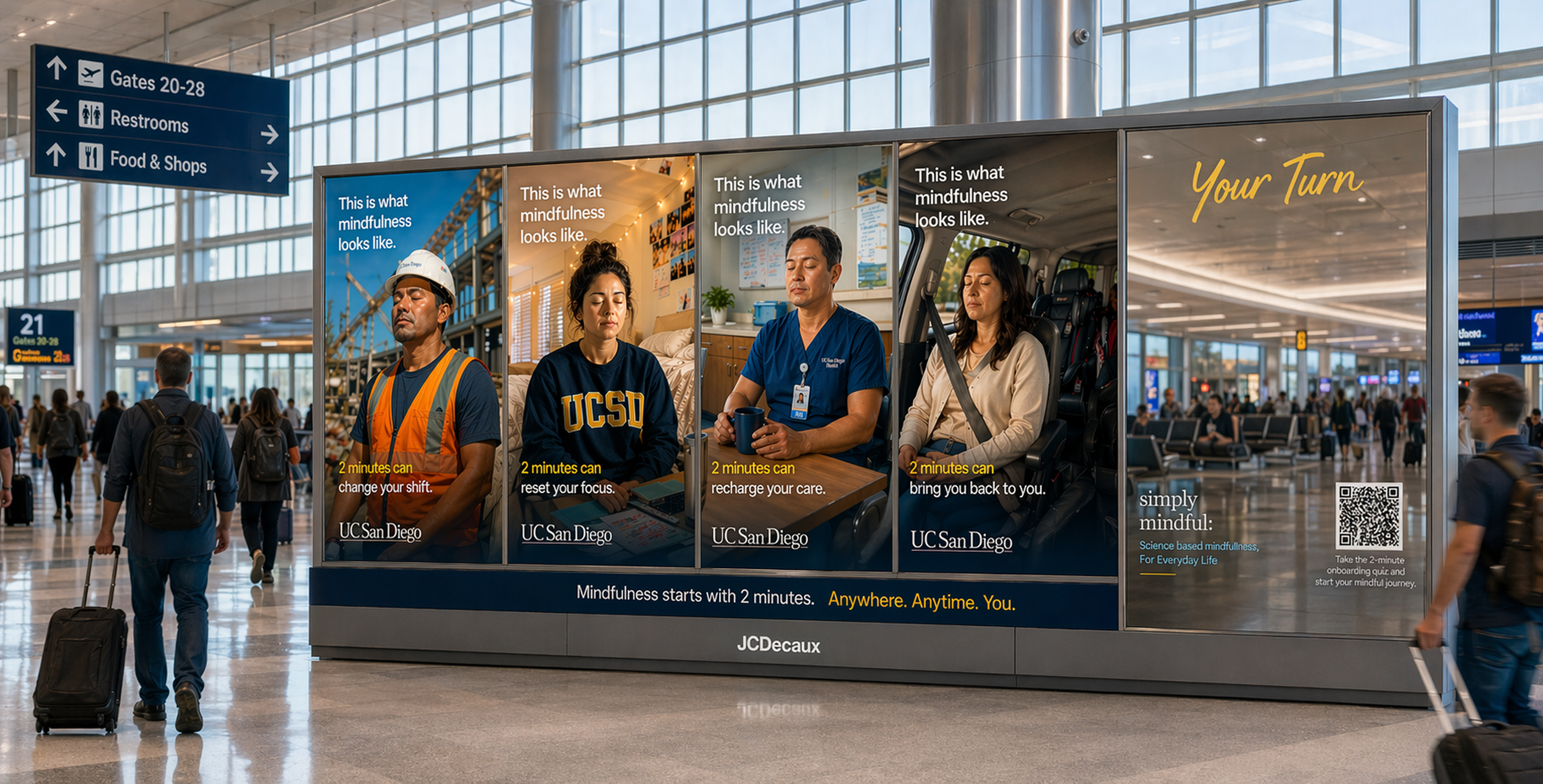
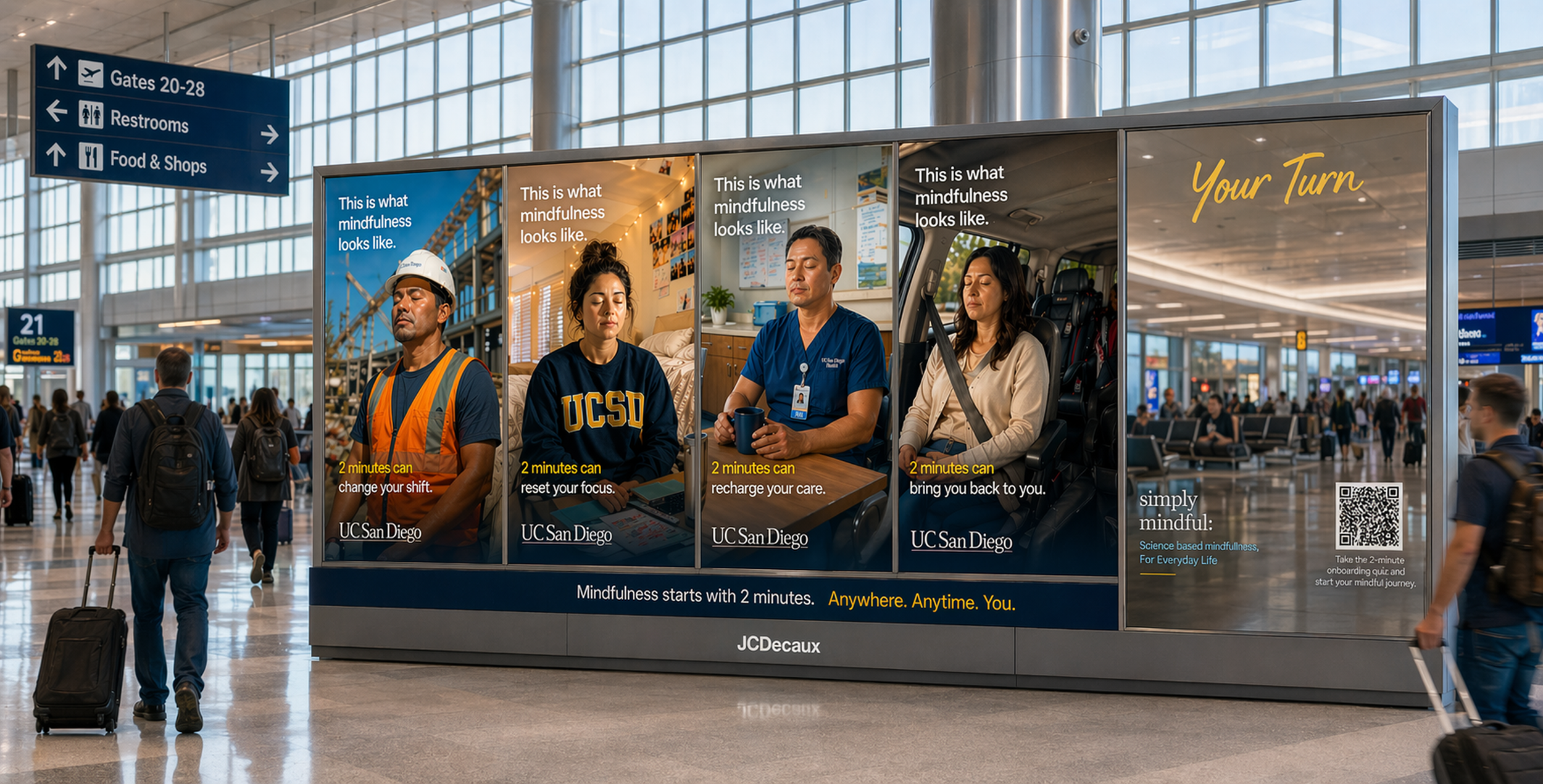
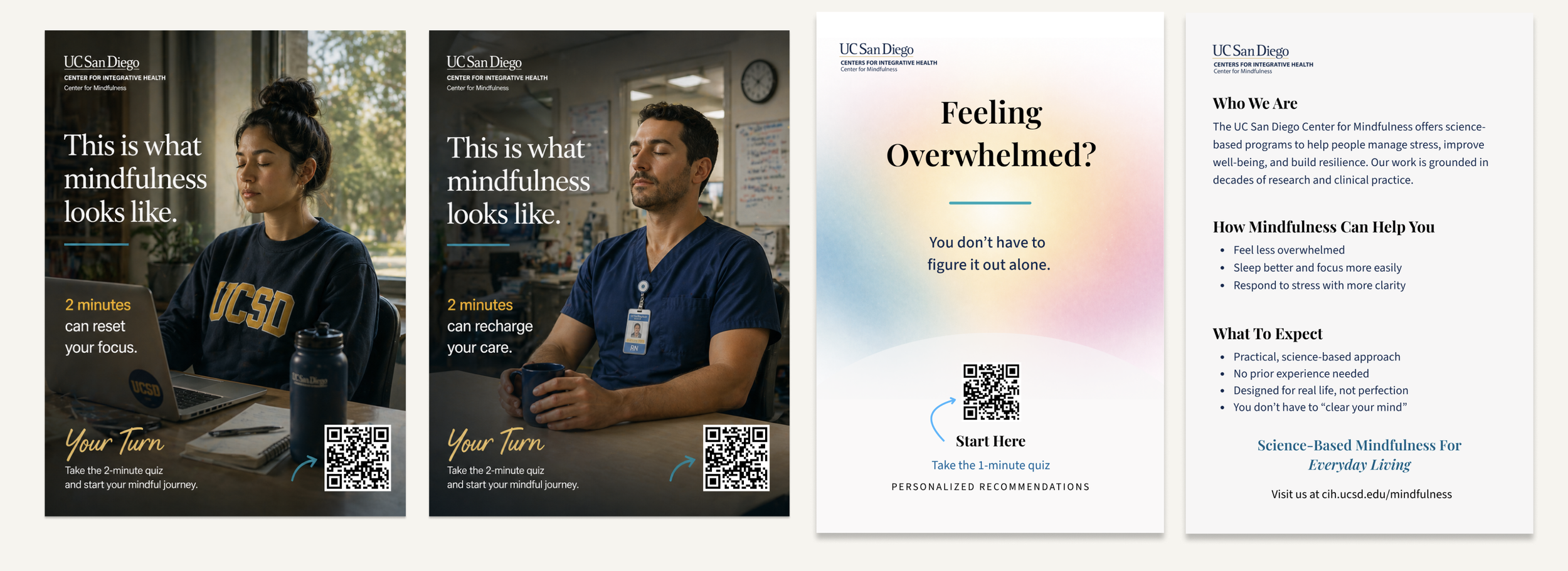
For the campaign, I brought our brief into Claude for creative direction, used its output to write image prompts, then took those into ChatGPT for realistic photography. I composited the results into an airport installation and posters for campus and hospital placement.
Michelle and Vennila ran their own AI workflows for the app and Spotify migration, including Figma Make and Claude Code for the app build. Even on separate deliverables, we stayed each other’s sounding board through every iteration.
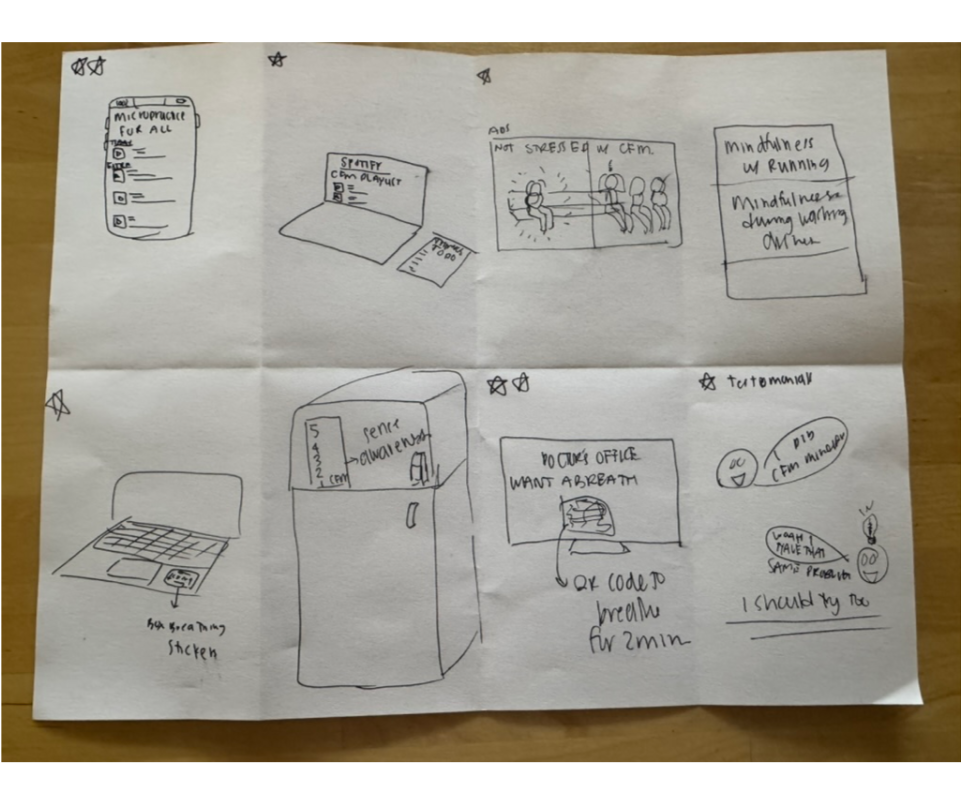
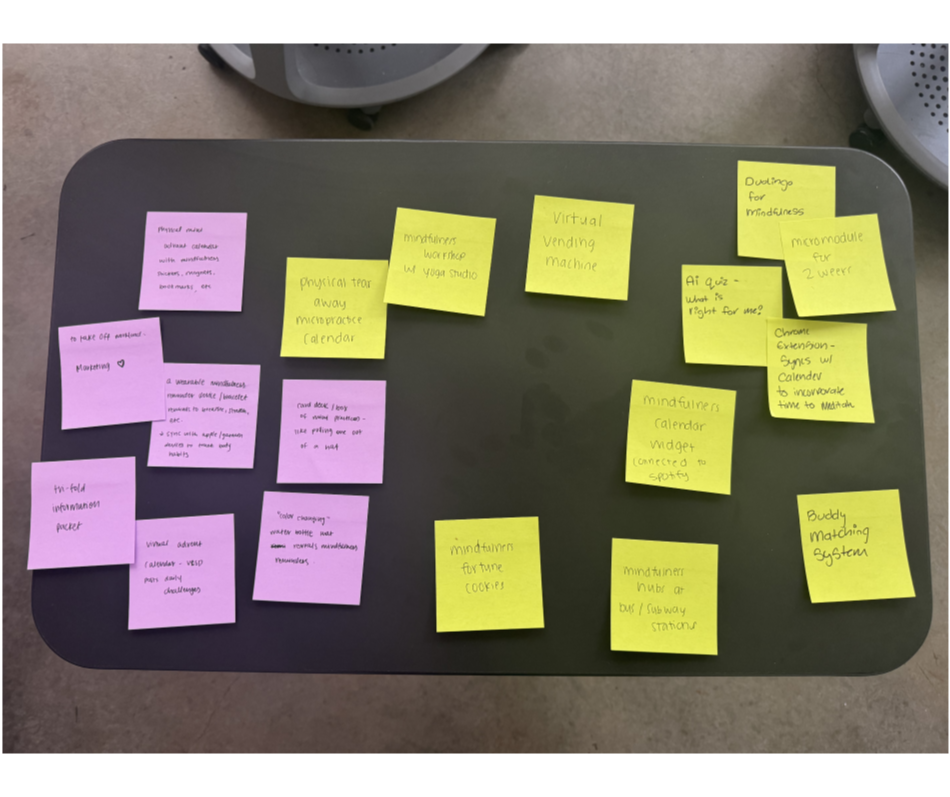
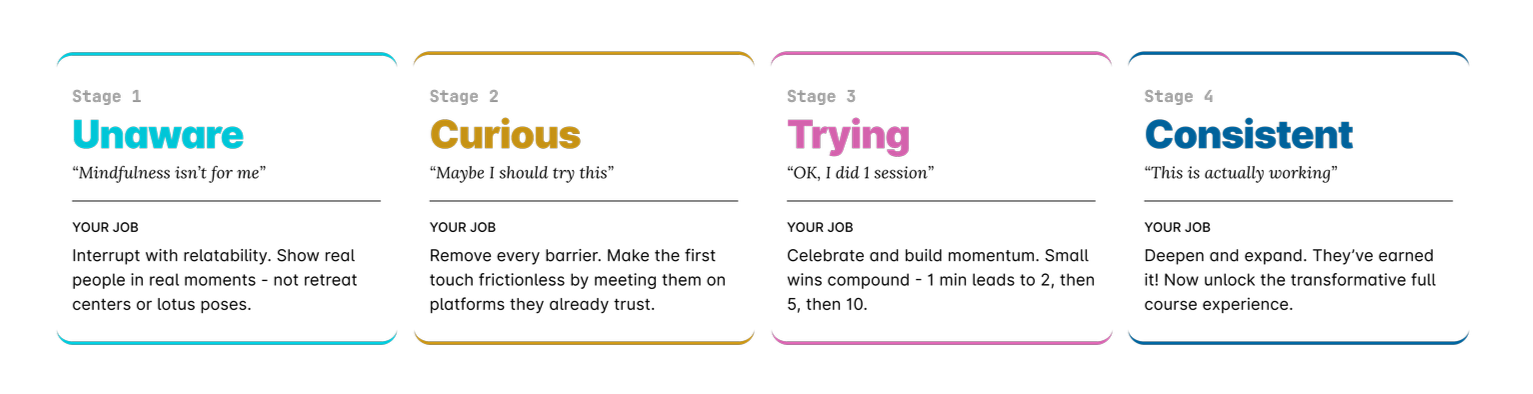
The insights pointed to a journey, not a single fix. We mapped four stages a newcomer moves through: unaware that mindfulness could be for them, curious enough to consider it, trying it for the first time, and consistent enough to want more. Each concept was designed to meet a specific stage.
At stage 1, the onboarding quiz gave newcomers a personalized way in before they had any context for what CFM offered. For stage 2, the team moved CFM's SoundCloud audio library to Spotify, meeting people where they already listen before asking for any real commitment. By stage 3, the mindfulness widget gave someone a first low-stakes session, one guided practice with nothing to set up. Finally, stage 4 was CFM's existing course offerings, the destination the rest of the journey was built to lead toward.
Underneath all four stages sat the same unresolved problem: a newcomer still had to find CFM first. That gap became the marketing campaign, designed to move someone from unaware to curious before they ever opened the quiz.
Final Outcome
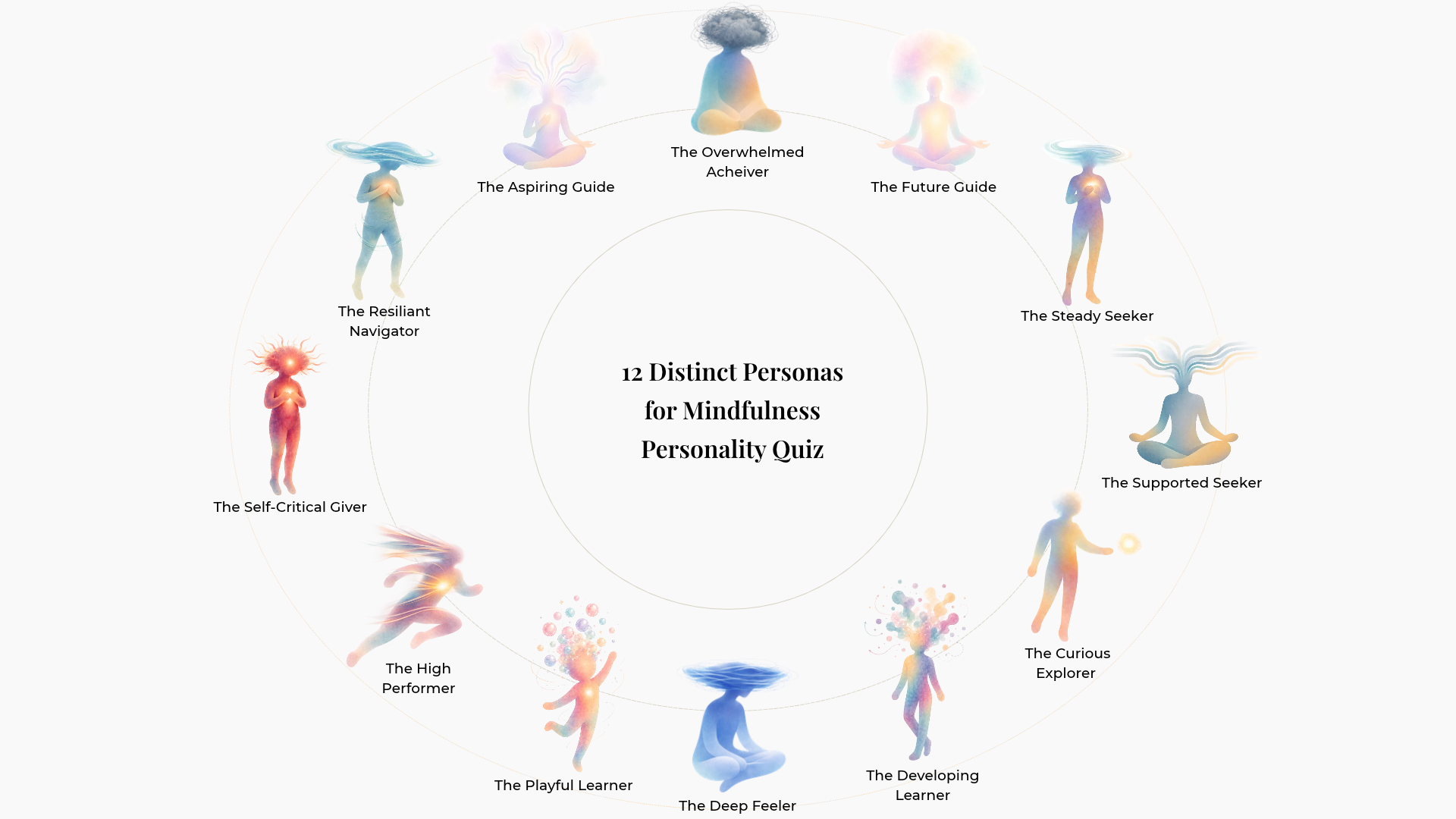
On our final presentation day, we handed CFM a toolkit built to run without us. The quiz came with its decision flowchart, 12 distinct personas, and editing videos, the Spotify library with a naming guide and cover art, the app as a working prototype, and the campaign as a messaging framework with Canva files their team already knows how to edit. Nothing is live yet because CFM is mid-redesign under a UCSD mandate, but every piece is ready for them to launch.
The Impact: CFM came to us asking how to reach patients through the hospital. They left with a way to reach everyone else, and a reason for newcomers to finally see themselves in mindfulness.
“This is what what we needed to bring us into this century”
“Our brains have been put into action”
Retrospective
Whose voices were missing.
Our research leaned on people already inside or near mindfulness. We never built a strong way to reach people who had never heard of it or never tried it, and those are the people the project was ultimately for. Not getting access to UCSD Health practitioners was a lesson too: it showed us how little reach CFM had inside its own health system, and it taught me to ask early whose voices are missing and why.
Following the research, not the ask.
If we had followed CFM’s original request, I don’t think we would have made anything meaningful, because the barriers were systemic and too big for a capstone to solve. Reframing the problem taught me how to walk a client through findings, showing how we got there so they could see we were still helping them, just in a different direction.
AI as a tool, not a replacement.
This was my first major project using AI from synthesis through prototyping and marketing. It covered gaps I couldn’t fill in a short timeline, like persona art and campaign development, but my judgement had to stay in the lead. AI is a good tool, and it can’t replace a good designer.